Monolith
Using Technical Art to create mesmerizing sceneries and landscaped, filled with life and color.
Project Context
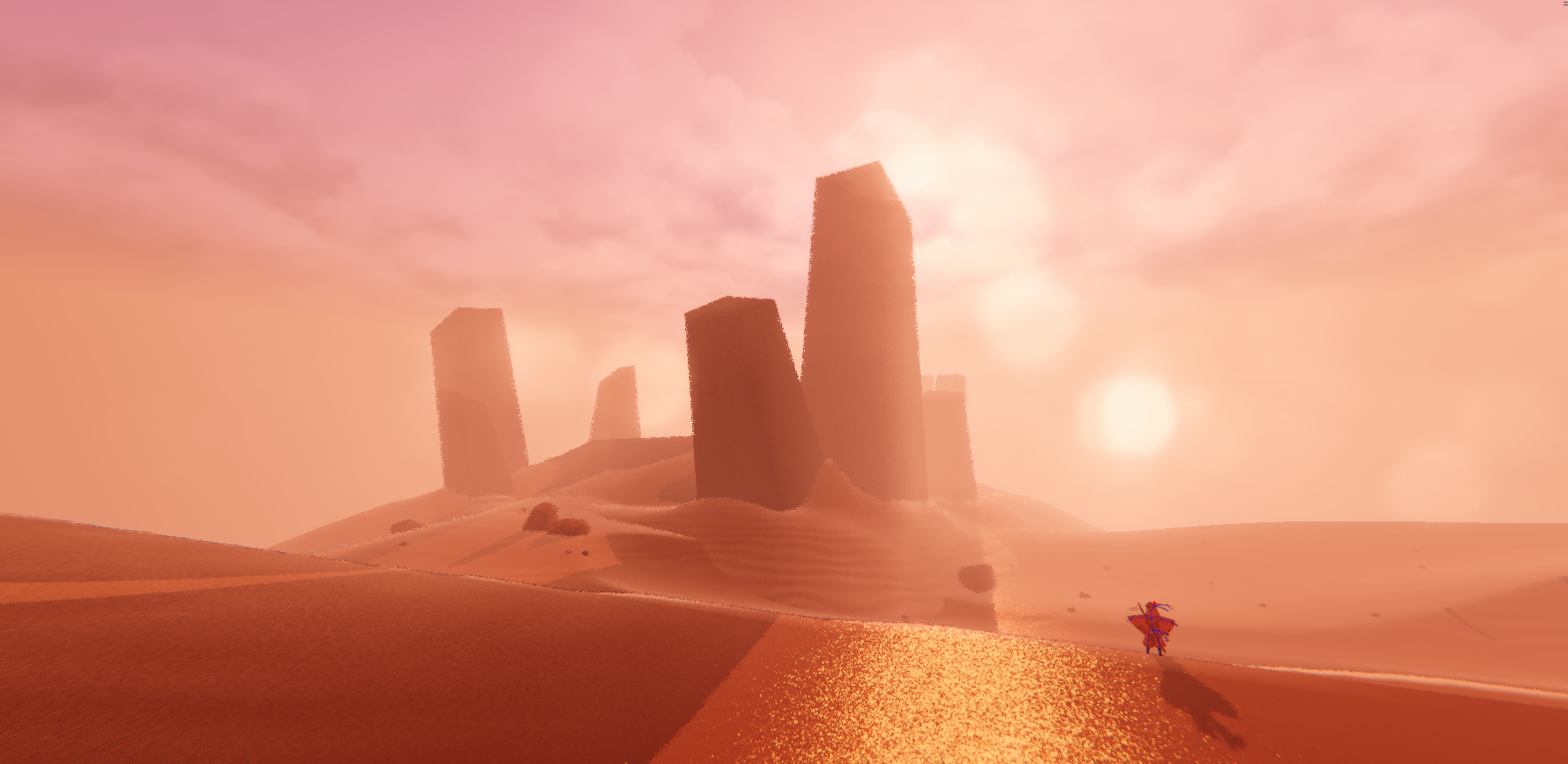
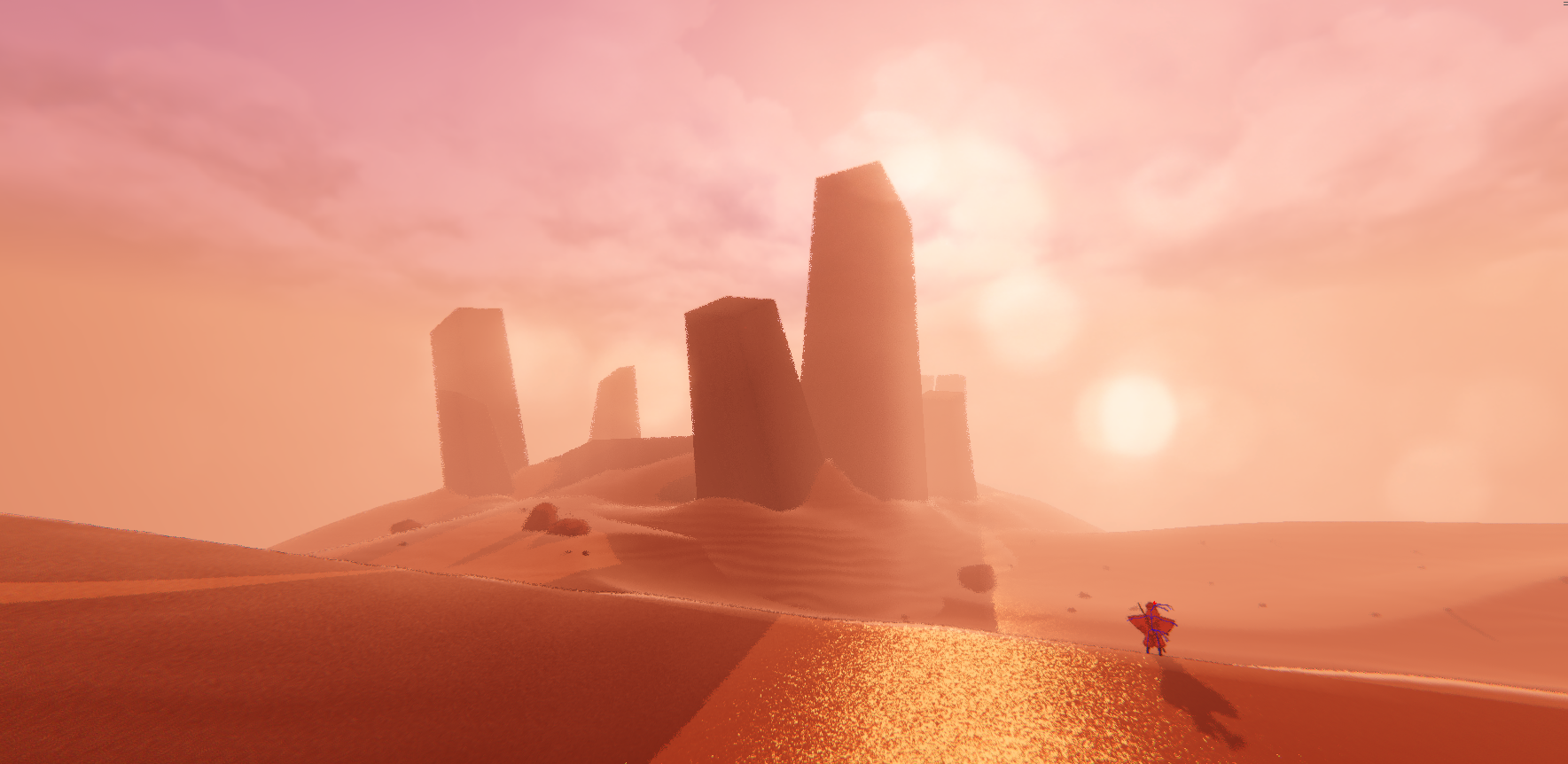
Monolith was made as my Bachelors Thesis Project. It turned out to be my personal technical art playground as I explored “infinity” as a theoretical concept in games that could be made by procedural systems.
These systems were made for one purpose only: The creation of a dynamic environment that feels alive. To achieve this goal I developed the following systems:
Procedural endless terrain
Dynamic day and night cycle
Volume based weather
Procedural animation for creatures
Scatterable objects on surfaces.
I built a system that scatters 3D assets across a landscape. With a scriptable object, letting an artist define specific parameters like: model to use, minimum and maximum randomization to objects transform and more.
Preformance Optimization: After all objects have been successfully scattered across the terrain, they get merged into one single mesh, effectively reducing draw calls on the GPU for each terrain chunk.
Examples
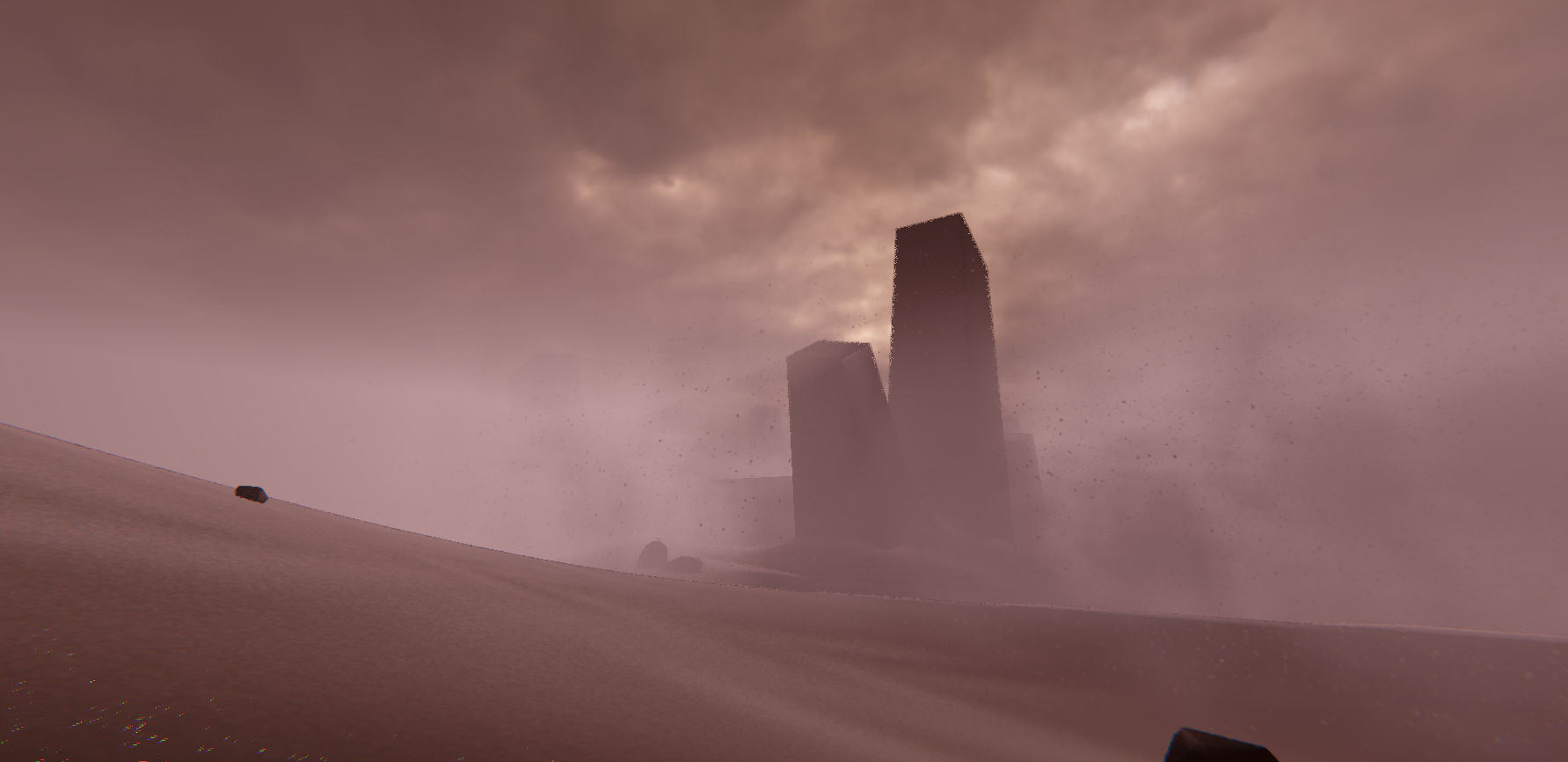
Fully customizable sky and weather.
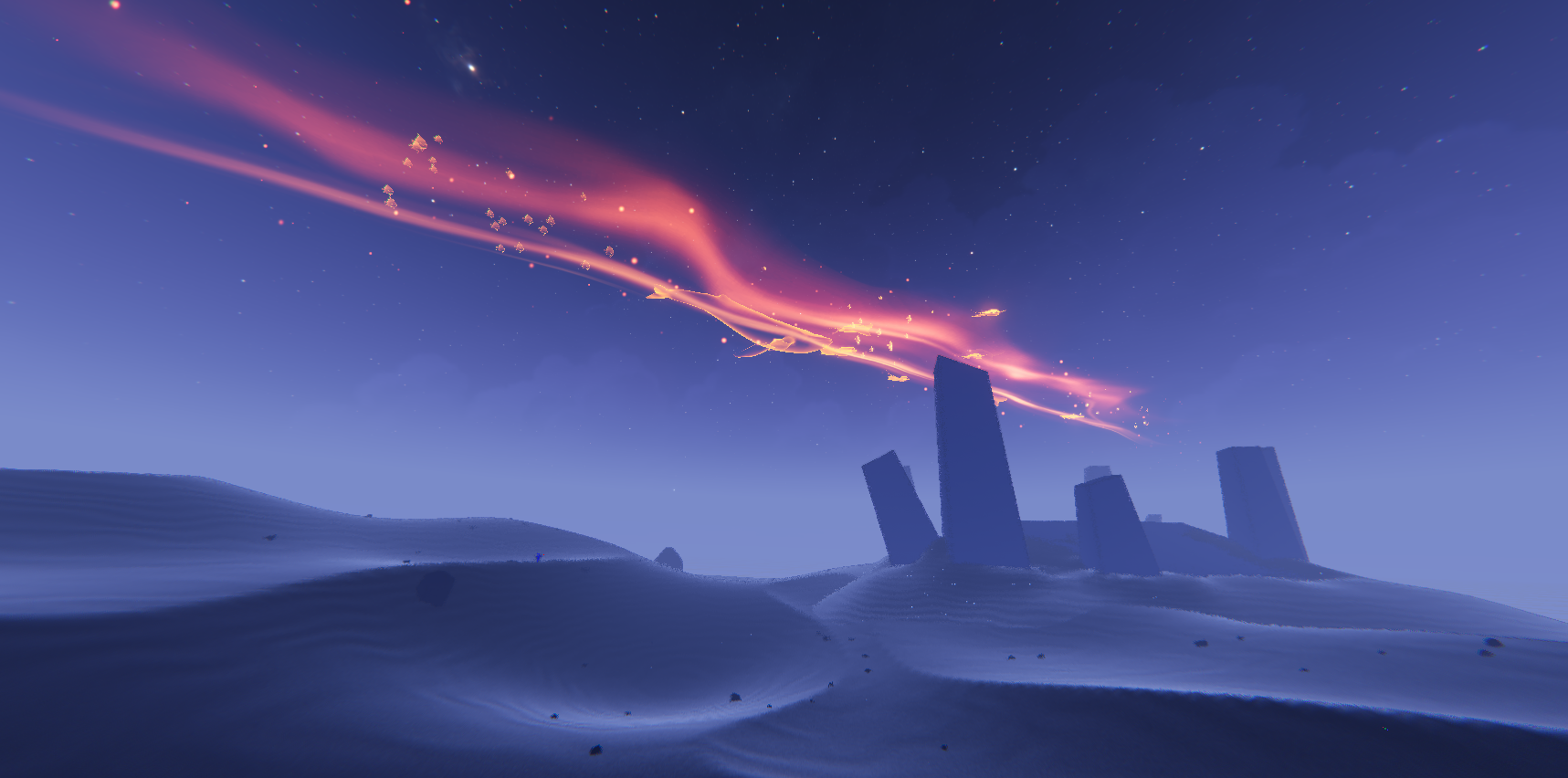
To ensure the most flexible and artist friendly approach on making real time skyboxes, I built a custom shader with different parameters and color handles to control the look and feel of the sky for any time of day.
This becomes even more powerful when combined with the volume based workflow to dynamically transition between sky and weather scenarios.
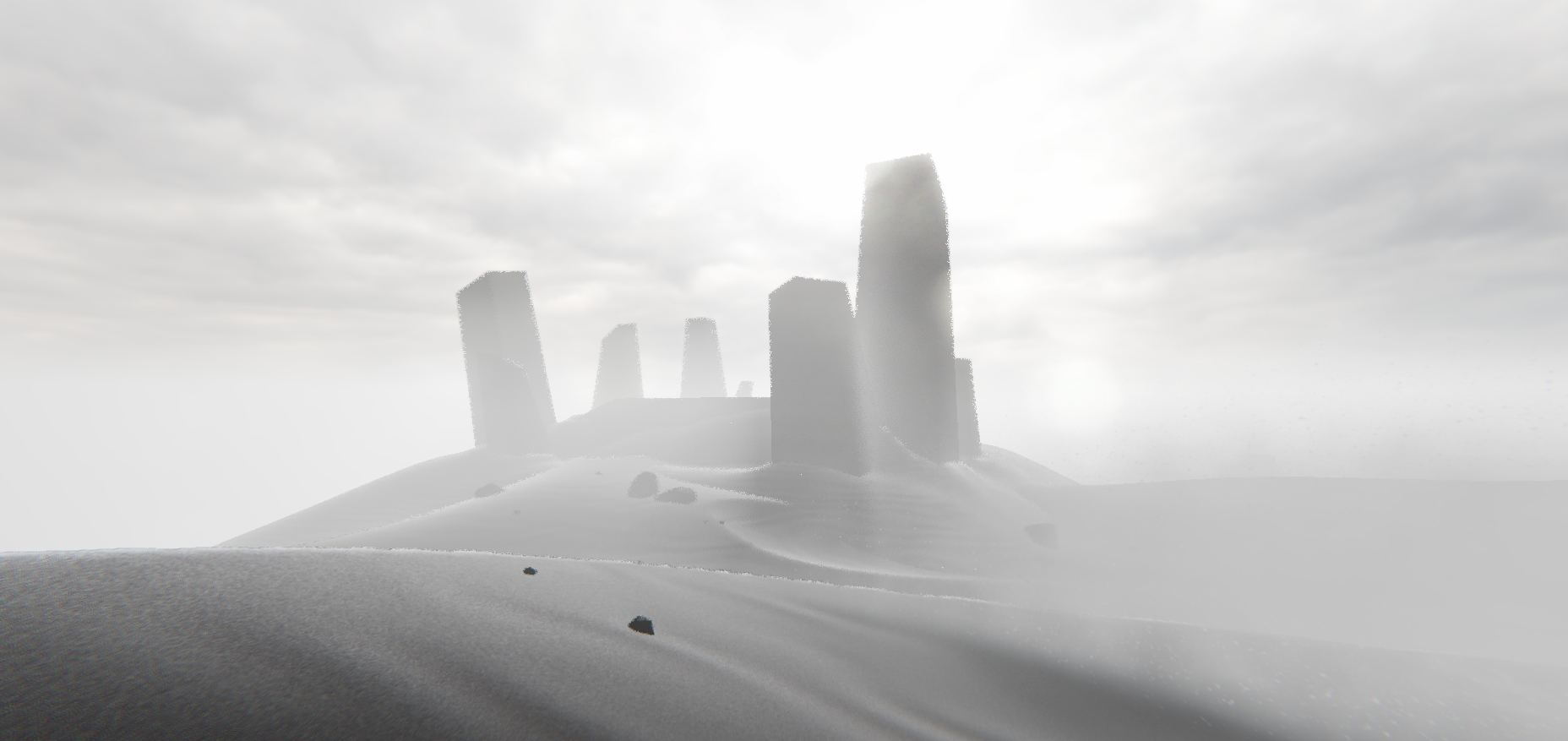
Dynamic blending between weather and sky conditions.
To create seamless transitions between weather conditions and sky visuals, I built a system that integrates our custom skybox shader and weather VFX into a volume based workflow.
Technical solutions for artistic problems